


What Is the Purpose of a Tourniquet?
A tourniquet is a device used to apply controlled pressure around a limb. Its purpose depends on the setting. In emergency care, a tourniquet can be used to reduce life-threatening bleeding from an arm or leg until definitive treatment is available. In clinical and laboratory environments, a tourniquet is most commonly used to temporarily restrict venous blood flow to make veins more prominent for blood collection or IV access. In both cases, the tourniquet supports a clear goal: creating safer, faster, more controlled care when time, visibility, and consistency matter.
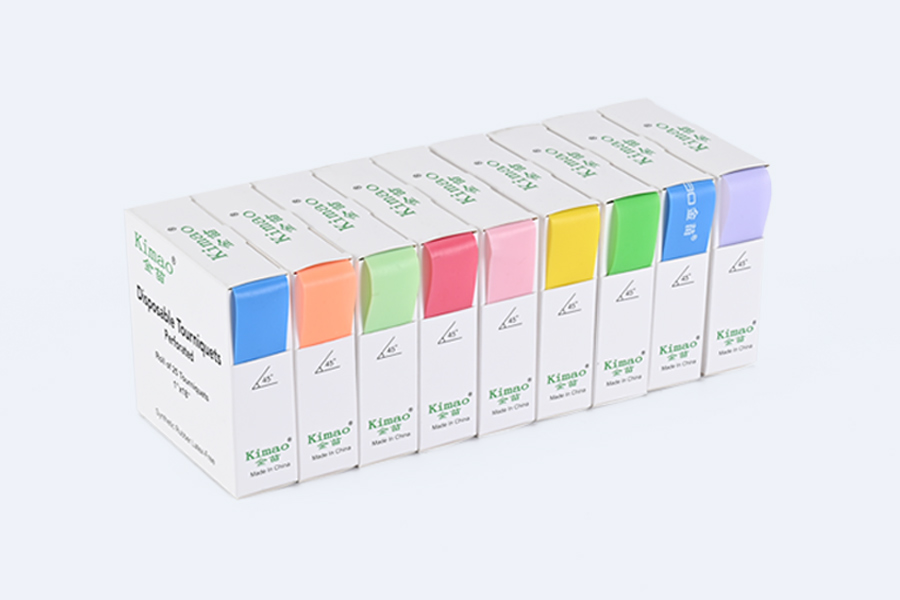
This article explains the main purposes of tourniquets, the differences between emergency and medical-use tourniquets, why disposable tourniquets are widely used in modern facilities, and what buyers should consider when sourcing them for daily workflows. For product details, visit KIMAO’s disposable tourniquet.
The Two Main Purposes of a Tourniquet
Purpose in emergency bleeding control
In trauma situations involving severe limb bleeding, a tourniquet can help reduce blood loss when direct pressure alone is not enough or cannot be maintained. The intent is time-critical stabilization until advanced medical care is reached. Because emergency tourniquet use involves high-stakes decisions, it should be performed according to recognized medical training and local protocols rather than improvised techniques.
Purpose in phlebotomy and IV procedures
In hospitals, clinics, labs, and blood collection settings, tourniquets are primarily used to:
Make veins easier to locate and access by temporarily slowing venous return
Support successful first-attempt venipuncture and IV cannulation
Reduce procedure time and patient discomfort by improving vein visibility and stability
This everyday clinical purpose is the most common reason many healthcare facilities purchase tourniquets in volume.
How a Tourniquet Helps During Blood Draws and IV Starts
When a tourniquet is applied correctly for venipuncture, it encourages veins to become fuller and easier to palpate. That improves the operator’s ability to choose an appropriate vein, align the needle angle, and complete the puncture smoothly. Better visibility often reduces repeated needle attempts, which supports patient satisfaction and workflow efficiency.
In busy outpatient labs or inpatient units, small improvements in first-pass success can translate into meaningful reductions in queue time, supply usage, and staff workload. This is why consistent tourniquet performance is not a minor detail in procurement, especially for high-throughput testing environments.
Why Disposable Tourniquets Are Widely Used
Disposable tourniquets are designed for single-patient use, which helps facilities reduce cross-contamination risk and simplify infection-control routines. Compared with reusable tourniquets that must be cleaned and tracked, disposable options support a more standardized established workflow, particularly where many patients are handled in rapid succession.
Common advantages facilities look for in disposable tourniquets include:
Cleaner single-use handling for patient-to-patient turnover
Predictable elasticity and tension from piece to piece
Easy stocking and distribution across multiple departments
Reduced need for reprocessing and associated labor steps
KIMAO’s disposable tourniquet is positioned for clinical environments where consistent, hygienic, single-use supplies support daily phlebotomy and IV routines.
Disposable vs Reusable Tourniquets
| Factor | Disposable Tourniquet | Reusable Tourniquet |
|---|---|---|
| Infection-control workflow | Single-patient use supports cleaner turnover | Requires cleaning and compliance tracking |
| Consistency of tension | Typically uniform per unit in packaged supply | Elasticity may change over time with use and washing |
| Operational handling | Simple use-and-discard routine | Requires collection, reprocessing, redistribution |
| Inventory management | Easy to distribute across stations | Needs control to prevent shortages or loss |
For many labs and clinics, operational simplicity and hygiene considerations make disposable tourniquets the preferred choice.
Where Tourniquets Are Used Most Often
Tourniquets show up across a wide range of healthcare environments:
Outpatient phlebotomy centers handling routine blood tests
Hospital wards supporting IV placement and blood sampling
Emergency departments for rapid triage blood draws and access
Blood donation workflows where speed and consistency matter
Dialysis and infusion settings where repeated access procedures occur
Mobile health services that benefit from compact, single-use supplies
In these settings, a disposable tourniquet is often chosen because it supports consistent daily usage without introducing extra reprocessing steps.
What Buyers Should Look for When Sourcing Disposable Tourniquets
For procurement teams, the best disposable tourniquet is the one that delivers reliable tension control while fitting the facility’s workflow and compliance expectations. Consider:
Elastic performance that feels stable during application and release
Comfortable surface contact to reduce pinching and irritation
Clean packaging and easy dispensing for high-throughput stations
Compatibility with routine venipuncture and IV access practices
Manufacturing consistency for large-volume repeat orders
If your facility wants a dependable supply aligned with clinical routines, KIMAO’s disposable tourniquet supports single-use workflow needs in hospitals, clinics, and labs.
Important Safety Notes
Tourniquets used for blood draws and IV placement are different from emergency hemorrhage-control tourniquets in design intent and use context. Clinical staff should follow internal policies and recognized training guidance for application, time limits, and patient-specific considerations. For emergency bleeding control, only follow approved protocols and professional training.
Conclusion
The purpose of a tourniquet is to apply controlled limb pressure to support medical goals. In emergencies, it can help reduce severe limb bleeding until definitive care is available. In everyday healthcare, it is mainly used to make veins easier to access for blood draws and IV placement, improving speed, consistency, and patient experience. Disposable tourniquets are widely adopted because single-use handling supports hygiene routines and streamlined operations.
To review options designed for clinical supply workflows, visit KIMAO’s disposable tourniquet.
Previous: What Is The Best Tourniquet?