


What Is The Best Tourniquet?
The best tourniquet depends on what you need it for. In healthcare, the word tourniquet is used in two very different contexts. Emergency tourniquets are designed for traumatic limb bleeding control and require specific training and protocols. Clinical tourniquets are most commonly used for blood draws and IV starts, where the goal is temporary venous restriction to make veins easier to access. If your daily work is phlebotomy, infusion, outpatient blood collection, or routine IV placement, the best tourniquet is the one that delivers consistent tension, comfortable application, fast release, and a workflow that supports infection control and high turnover.
This guide focuses on clinical-use tourniquets and explains how to choose the best option for healthcare facilities and distributors. For single-use supply, KIMAO offers a professional disposable tourniquet.
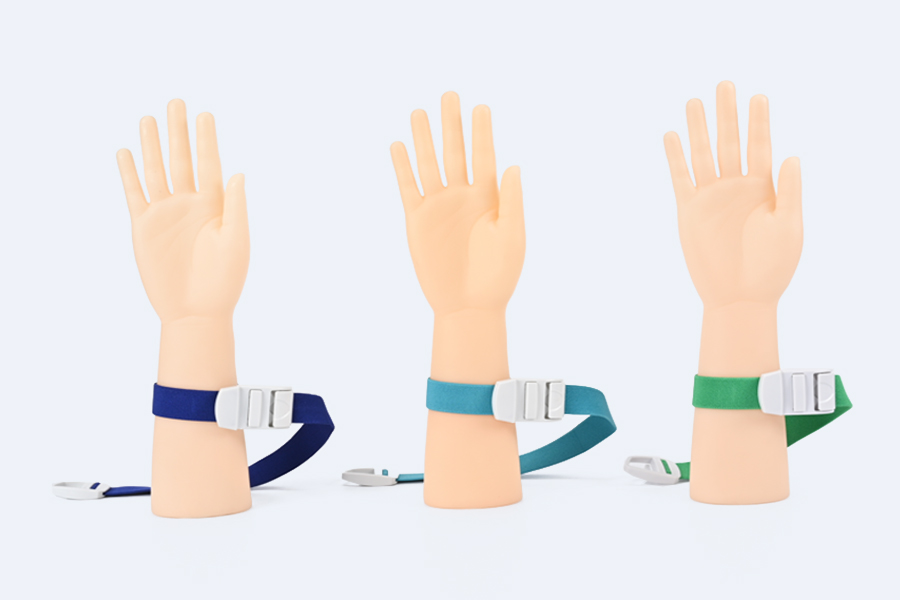
Define Best by Use Case Before You Buy
A tourniquet that is excellent in a trauma kit is not automatically the right choice for routine venipuncture. For clinical use, best means:
Reliable vein prominence without excessive discomfort
Quick on and off handling that supports smooth workflow
Predictable performance across many patients and operators
Reduced cross-contamination risk in fast-paced settings
Easy stocking and distribution across departments
For many hospitals and labs, disposable tourniquets meet these priorities because they combine consistent performance with single-use handling.
What Makes a Clinical Tourniquet High Quality
Consistent tension and elasticity
A tourniquet must apply enough pressure to slow venous return while remaining comfortable and controllable. If tension varies from unit to unit, first-pass success can drop because vein visibility and stability become inconsistent. Consistency matters most when many staff members use the same supply across shifts.
Comfortable contact and smooth release
Clinical tourniquets are applied directly to skin or over thin clothing. A good design avoids pinching and allows controlled release without snapping back. Smooth release helps reduce sudden discomfort and supports safer handling around needles and IV catheters.
Workflow-friendly hygiene
In clinical environments, infection control is a purchasing driver. Disposable options support single-patient use, simplify compliance, and reduce the operational burden of collecting and reprocessing reusable tourniquets. This becomes more important as patient volume increases.
Packaging and dispensing efficiency
A tourniquet that is easy to dispense, distribute, and store supports faster station setup and fewer interruptions. High-throughput facilities often value packaging that keeps supplies organized at point of care.
KIMAO’s disposable tourniquet is built for routine clinical workflows where consistent single-use supplies improve day-to-day efficiency.
Disposable vs Reusable Tourniquets: Which Is Best for Facilities?
| Selection Factor | Disposable Tourniquet | Reusable Tourniquet |
|---|---|---|
| Infection-control routine | Single-patient use supports cleaner turnover | Requires cleaning, tracking, and compliance steps |
| Performance consistency | Typically stable per unit in packaged supply | Elasticity can change with age and repeated washing |
| Workflow speed | Simple use-and-discard process | Extra steps to collect and reprocess |
| High-volume suitability | Strong fit for busy labs and wards | Can become harder to manage as volume increases |
| Inventory control | Easy to distribute to multiple stations | Needs return management to prevent loss |
For many phlebotomy and IV environments, disposable tourniquets are often considered the best choice because they reduce reprocessing friction and support consistent daily handling.
Where the Best Tourniquet Usually Matters Most
Clinical tourniquets are used repeatedly across departments, and the best choice often depends on where they will be used most:
Outpatient labs where speed and first-pass success support patient flow
Emergency departments where quick access is critical
Inpatient wards where many staff perform routine blood draws
Infusion centers where frequent access and comfort matter
Mobile healthcare services where compact, single-use supplies reduce logistics
In these settings, a disposable tourniquet can improve standardization because every use starts with a clean, consistent unit.
Buyer Checklist: How to Choose the Best Tourniquet for Your Facility
A practical procurement checklist helps avoid mismatched supplies:
Confirm your use case is routine venipuncture or IV start rather than trauma bleeding control
Prioritize consistent stretch and controllable tension for reliable vein access
Evaluate comfort during application and release, especially for repeat procedures
Align with infection-control policies and patient turnover requirements
Consider how the packaging supports point-of-care dispensing and stock rotation
Ensure the supplier can support stable long-term supply for repeat purchasing
For facilities that want single-use supplies aligned with these criteria, KIMAO’s disposable tourniquet supports routine blood collection and IV access workflows.
How to Avoid Common Purchasing Mistakes
The most common mistake is selecting based only on price and ignoring how the tourniquet behaves during real procedures. A small difference in elasticity, release feel, or packaging efficiency can affect staff speed and patient experience across thousands of uses.
Another common mistake is mixing emergency tourniquet requirements with clinical ones. Clinical tourniquets are optimized for venous restriction and frequent daily use, while emergency tourniquets prioritize hemorrhage control and require different design and training considerations.
Conclusion
The best tourniquet is the one that matches your clinical workflow. For routine blood draws and IV placement, best means consistent tension, comfortable application, fast and controlled release, and a hygiene routine that supports high patient turnover. For many hospitals, labs, and outpatient centers, disposable tourniquets are often the best fit because single-use handling improves standardization and reduces cross-contamination concerns.
To review a single-use option designed for clinical supply workflows, visit KIMAO’s disposable tourniquet.
Previous: