


How To Place A Tourniquet?
Placing a tourniquet correctly is a simple step that has a big impact on comfort, vein visibility, and the quality of a blood draw. For routine venipuncture and IV-start workflows, a tourniquet is used to temporarily slow venous return so the vein becomes easier to locate and access. The goal is controlled pressure that improves vein filling while still allowing arterial flow, so the distal pulse remains present.
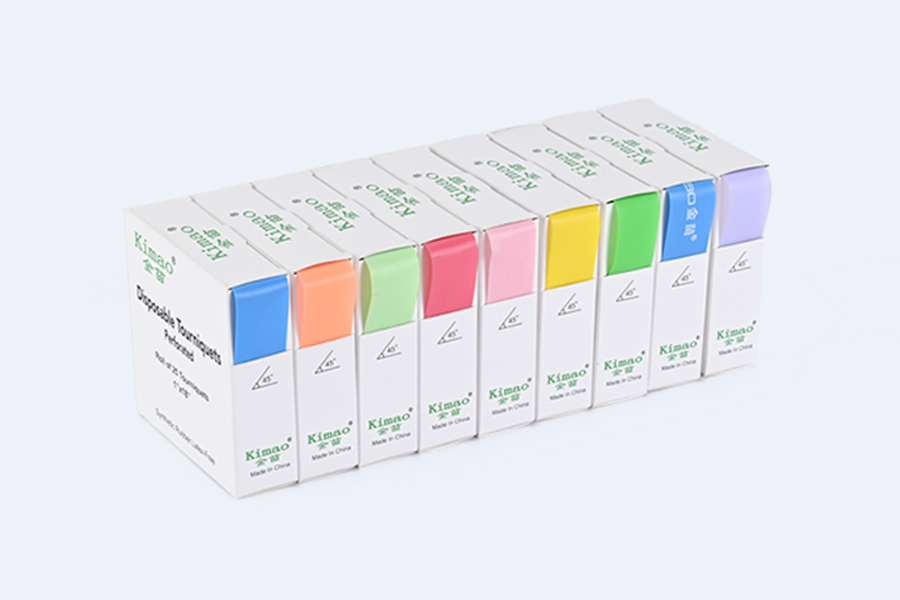
This guide focuses on clinical-use disposable tourniquets and explains where to place them, how tight to apply them, how long to keep them on, and what to do if you need to reapply. You can view KIMAO’s disposable option here: disposable tourniquet.
Placement Location And Tension
A tourniquet should be placed above the planned puncture site, not directly over it. In most venipuncture procedures, positioning the tourniquet about 7 to 10 cm above the intended site creates good venous distention while keeping the working area clear for skin prep and needle insertion.
Correct tension has a clear practical test:
Tight enough to impede venous return and make veins more prominent
Not so tight that arterial flow is blocked
Distal pulse should remain palpable when applied properly
If the tourniquet is too loose, you will not achieve consistent venous filling. If it is too tight, the patient may experience unnecessary discomfort, and the risk of hemoconcentration or altered test values increases if the tourniquet stays on too long.
Step By Step Technique For Routine Venipuncture
A repeatable technique reduces variability and helps maintain sample integrity.
Prepare the site and position the arm
Ensure the limb is supported and relaxed. A relaxed arm improves vein assessment and reduces movement during needle entry.Apply the tourniquet at the correct distance
Wrap the tourniquet 7 to 10 cm above the chosen puncture site. Make sure it sits flat against the skin without twisting. For disposable tourniquets, a smooth, even wrap helps avoid pinching.Set tension and confirm arterial flow
Tighten until the vein becomes more prominent. Check that a distal pulse is still present. Ask the patient to make a gentle fist if needed, but avoid repeated pumping, which can influence some lab results and create unnecessary pressure changes.Identify the vein and confirm placement landmarks
Use light palpation to confirm vein direction and stability. Use visual landmarks such as skin creases and notches to keep placement consistent.Clean the puncture site and let it dry
Once the site is cleaned, avoid touching the prepared skin area.Start the draw, then release at the right time
Once blood flow is established, release the tourniquet promptly. As a best practice, release the tourniquet before withdrawing the needle when collecting blood.
This sequence is designed to balance vein access, patient comfort, and consistent pre-analytical conditions.
How Long Can A Tourniquet Stay On
For routine blood collection, tourniquet time should be kept short. Many phlebotomy standards and institutional procedures follow a one-minute rule before accessing the vein, because prolonged tourniquet time can lead to hemoconcentration and may affect certain test results.
Practical timing guidance:
Aim to keep the tourniquet on for less than 1 minute before puncture
Release as soon as blood flow is established
If vein selection takes longer than expected, release the tourniquet, allow circulation to normalize, then reapply
If you need to reapply, waiting about 2 minutes before reapplying is commonly recommended to reduce the impact of prolonged stasis on the sample and patient comfort.
Common Mistakes And How To Avoid Them
Small errors in tourniquet placement are common and usually easy to correct.
Placing the tourniquet too close to the puncture site
This reduces working space and can interfere with skin antisepsis. Keep the recommended distance so the puncture area remains clear.
Over-tightening
Excess tension increases discomfort and can make vein assessment harder by creating tissue compression. Tighten only to the point of venous distention while maintaining a palpable pulse.
Leaving the tourniquet on too long
Long application times increase the chance of altered results and can lead to bruising or patient discomfort. If the process is delayed, release and reapply rather than keeping continuous pressure.
Applying over joints or clothing folds
This can cause slipping and uneven pressure. Place on a stable, flat area of the limb.
Reusing single-use tourniquets
Disposable tourniquets are designed for single use to support hygiene protocols and reduce cross-contamination risks. For clinical environments, single-use handling also helps standardize performance across patients.
Routine Tourniquet Versus Emergency Bleeding Control
Disposable venipuncture tourniquets are not the same as emergency hemorrhage-control tourniquets. For life-threatening limb bleeding, use a purpose-designed emergency tourniquet and follow recognized first-aid guidance and local protocols. If there is severe bleeding, prioritize emergency services and trained intervention rather than adapting a routine disposable tourniquet.
Conclusion
Correct tourniquet placement for venipuncture is defined by three priorities: place it at the right distance above the puncture site, apply only enough tension to distend veins while keeping arterial flow present, and keep application time short by releasing promptly once blood flow begins. When these basics are done consistently, you improve vein access, reduce patient discomfort, and support more reliable sample conditions.
If you are selecting disposable tourniquets for clinical workflows and want guidance on sizing, packaging, or consistent-use procedures, contact KIMAO. Share your application scenario and usage volume, and we can recommend suitable options and customization support through our disposable tourniquet program.
Previous: What A Tourniquet Is Used For?