


Where on This Person'S Arm Should A Tourniquet Be Applied?
For life-threatening bleeding from an arm, an emergency tourniquet should generally be placed 2–3 inches, or approximately 5–7.5 cm, above the wound and between the wound and the heart. It must not be positioned directly over the injury, elbow, or another joint. If the wound cannot be located quickly, trained responders may use a high-and-tight position on the upper arm.
Emergency note: Call emergency medical services immediately. This article provides general education and does not replace certified bleeding-control training or local emergency protocols.
How Do You Identify the Correct Position on the Arm?
The first step in deciding where on the arm a tourniquet should be applied is to identify the source of life-threatening bleeding. Signs may include blood flowing continuously or spurting, a rapidly growing pool of blood, clothing becoming soaked, or a person showing signs of shock.
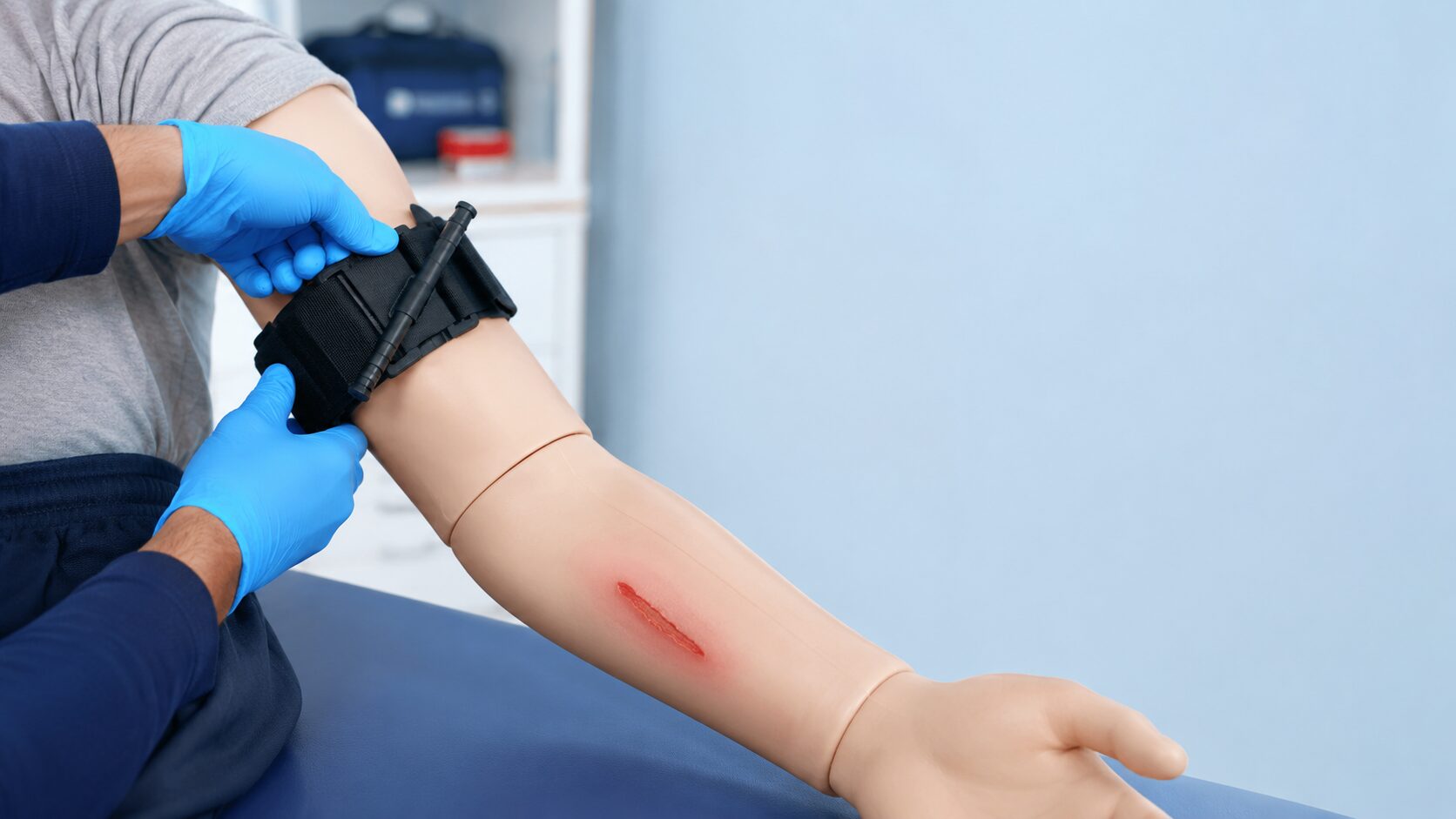
When the wound is clearly visible, place the emergency tourniquet:
Approximately 2–3 inches above the wound.
Between the wound and the person’s torso.
On the upper or lower arm, provided it is not over a joint.
Tightly enough to stop visible bleeding completely.
The American Red Cross recommends placing a tourniquet 2–3 inches above the wound while avoiding the wound itself and joints. “Above” means closer to the heart, not simply higher relative to the ground.
Where Should It Be Placed If the Wound Is Near the Elbow?
An emergency tourniquet should never be placed directly across the elbow. A joint prevents the band from compressing the underlying blood vessels evenly and may make bleeding control less reliable.
If the injury is immediately below the elbow, position the tourniquet above the elbow on the upper arm. If the injury is farther down the forearm and there is enough space, it may be placed 2–3 inches above the wound without crossing the joint.
| Arm injury location | General emergency placement |
|---|---|
| Upper arm | 2–3 inches above the wound, below the shoulder if space permits |
| Forearm | 2–3 inches above the wound, without covering the elbow |
| Immediately below elbow | On the upper arm, above the elbow |
| Wound location unknown | High and tight on the upper arm |
| Shoulder or armpit | Do not use a limb tourniquet over the torso; apply direct pressure and follow emergency instructions |
The final position may depend on the injury, available equipment and the responder’s training. Emergency dispatchers should be followed whenever communication is available.
What Does “High and Tight” Mean?
“High and tight” means placing the emergency tourniquet high on the injured limb and tightening it until bleeding stops. On an arm, this normally means positioning it high on the upper arm, near—but not inside—the armpit.
This approach may be appropriate when:
Severe bleeding is obvious but the exact wound cannot be found quickly.
Clothing or environmental conditions prevent wound exposure.
There are multiple injuries along the same arm.
The scene is unsafe and immediate action is necessary.
A trained emergency protocol specifically directs this method.
When the wound is clearly visible and conditions allow proper assessment, the American College of Surgeons’ Stop the Bleed guidance supports more targeted placement above the bleeding site. Correct tourniquet placement on the arm for severe bleeding should therefore reflect both wound visibility and the responder’s training.
How Tight Should an Emergency Tourniquet Be?
Placement alone is not enough. An emergency tourniquet must be tightened until the bleeding stops. A loose device can restrict venous return while allowing arterial blood to continue entering the limb, potentially worsening blood loss.
After positioning the device:
Pull the strap firmly to remove slack.
Tighten the windlass or specified mechanism.
Continue until visible bleeding stops.
Secure the tightening mechanism.
Record the application time.
Do not cover the device with clothing or a bandage.
Do not loosen or remove it while waiting for professional care.
If the first properly tightened device does not control the bleeding, trained responders may position a second emergency tourniquet immediately above the first, closer to the torso. Emergency medical instructions and the device manufacturer’s directions take priority.
Can a Disposable Medical Tourniquet Be Used for Severe Bleeding?
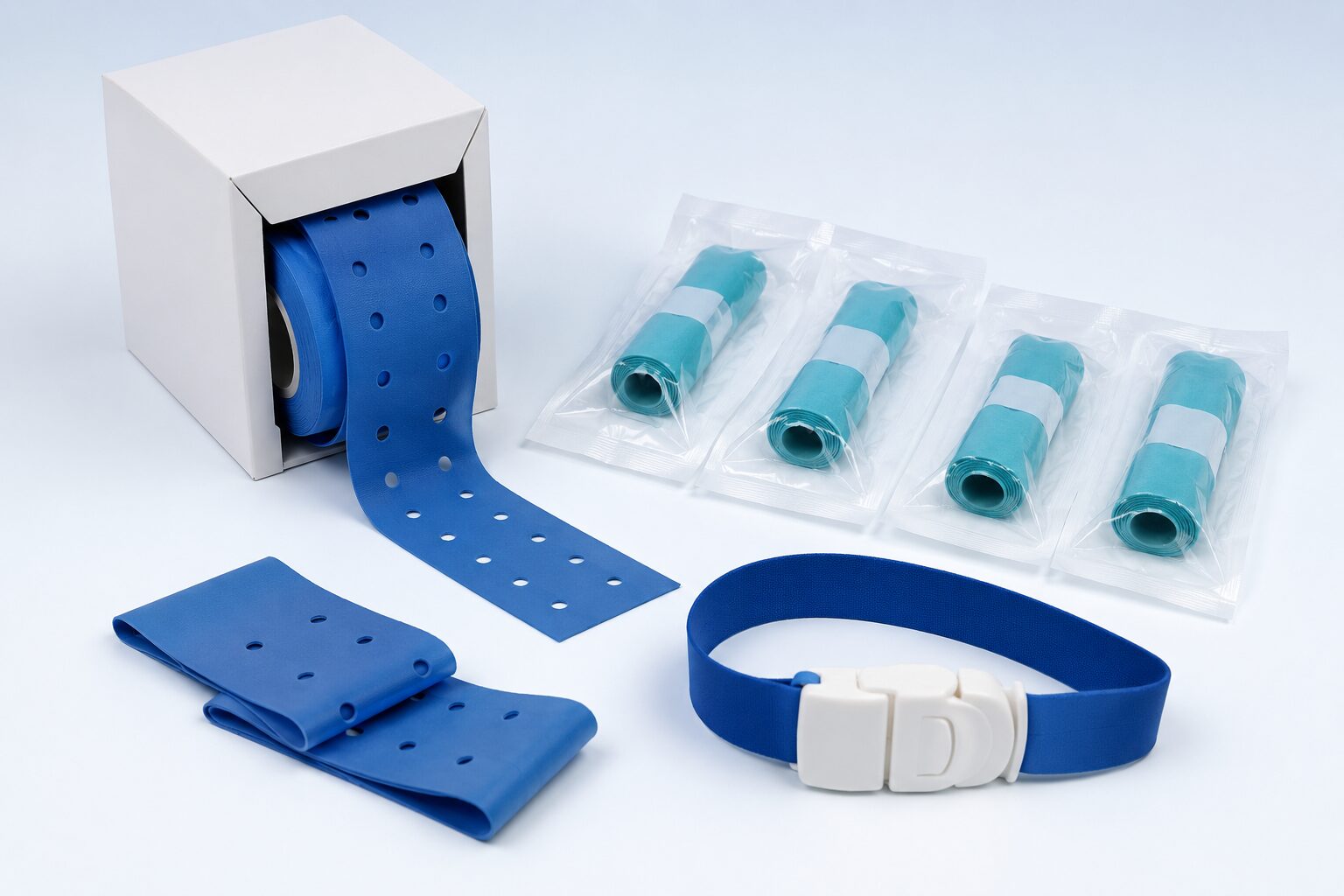
No. A disposable elastic tourniquet designed for venipuncture is not automatically an emergency hemorrhage-control device.
This distinction is especially important because the word “tourniquet” describes products with different intended uses:
Emergency tourniquets are designed to stop life-threatening arterial or venous bleeding from an arm or leg.
Disposable phlebotomy tourniquets temporarily restrict venous return to make veins easier to locate during blood collection, IV insertion or clinical procedures.
Reusable buckle tourniquets may also be intended for venous access rather than trauma care.
RONGHAI manufactures disposable tourniquets and medical polymer products for professional healthcare supply. These products should be used only for their stated purpose and according to their labeling. A venipuncture tourniquet must not be represented as an emergency trauma device unless it has been specifically designed, tested and approved for that application.
Why Does Product Identification Matter in Medical Procurement?
Medical distributors and healthcare institutions should not evaluate a tourniquet solely by appearance, elasticity or price. Intended use determines the necessary product design, instructions, packaging, validation and regulatory documentation.
As an OEM/ODM disposable tourniquet manufacturer, RONGHAI supports customization for appropriate clinical applications, including material, size, color and packaging configurations. Its disposable tourniquet range includes latex-free and powder-free TPE options, individually rolled products, perforated formats and direct-extraction packaging.
Procurement teams should confirm:
Intended clinical use
Material composition
Latex status
Dimensions and elasticity
Individual or bulk packaging
Lot identification and shelf-life information
Applicable quality and regulatory documentation
Labeling language and private-label requirements
Storage and transportation conditions
RONGHAI states that its quality system implements ISO 9001:2015 and ISO 13485:2016 requirements, while selected products carry applicable CE documentation. Buyers should request current, product-specific certificates rather than assuming that one certificate covers every tourniquet model.
Common Tourniquet Placement Errors
Placing It Directly Over the Wound
The device needs to compress blood vessels above the injury. Positioning it over damaged tissue can interfere with bleeding control and complicate wound management.
Placing It Over the Elbow
The rigid structure of the joint prevents even circumferential compression. Move the device above the elbow when necessary.
Failing to Tighten It Enough
An emergency tourniquet is expected to be painful when properly tightened. Bleeding must stop; comfort is not the indicator of correct tension during a life-threatening emergency.
Loosening It Periodically
A bystander should not loosen an emergency tourniquet after application. Removing or loosening it can restart severe bleeding. Only qualified medical professionals should make that decision.
Using the Wrong Type of Product
A narrow elastic strip for blood collection is not a substitute for a validated emergency windlass tourniquet. Always identify the product’s intended use before deployment.
Quick Answer
For a visible, life-threatening arm wound, position an emergency tourniquet 2–3 inches above the injury, toward the torso, and never over the wound or elbow. Use a high-and-tight upper-arm position when the wound cannot be located quickly and the applicable emergency protocol recommends it. Tighten the device until bleeding stops, record the time and wait for emergency professionals.
For hospitals and distributors sourcing tourniquets for blood collection or IV access, explore the RONGHAI disposable tourniquet range and verify the intended use, material, packaging and documentation for each model.
Medical References
American Red Cross, How to Apply a Tourniquet
American College of Surgeons, Stop the Bleed
Product specifications and quality-system information published by RONGHAI Medical
Previous: Where To Place A Tourniquet?